
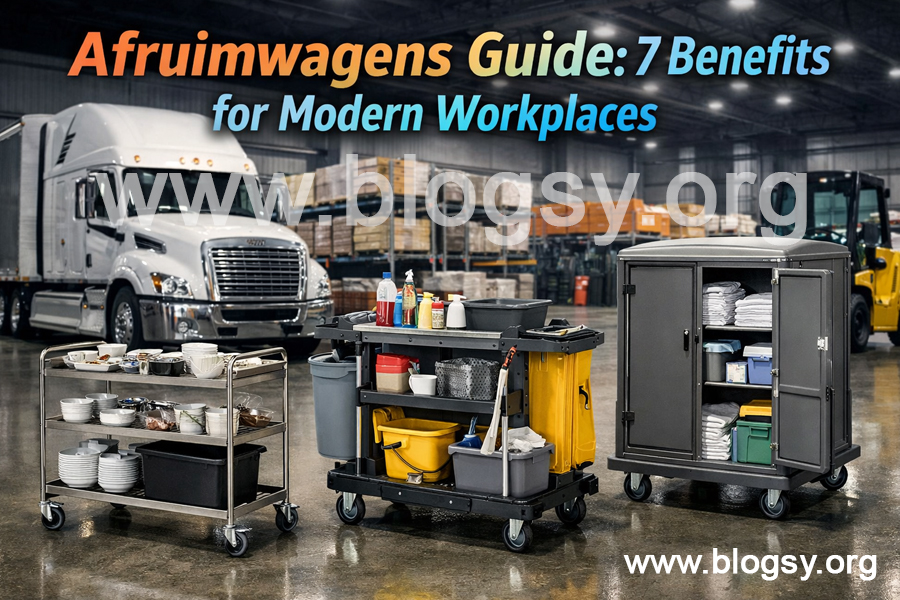
Modern workplaces depend heavily on efficient transport solutions, especially in fast-moving industries. The concept of Afruimwagens emerged to solve everyday logistical challenges. These utility transport carts, service clearing trolleys, material handling systems, and commercial logistics tools help teams move items quickly without constant manual lifting.
Moreover, organizations value tools that simplify daily operations. In restaurants, hospitals, and warehouses, these industrial service carts, hospital transport equipment, hospitality workflow tools, and logistics movement systems streamline tasks. As a result, employees complete duties faster while maintaining a safer and more organized workspace.
What Exactly Are Afruimwagens?
At its core, an Afruimwagen refers to a specialized trolley designed for organized transportation tasks. Unlike ordinary carts, these industrial clearing carts, multi-tier service trolleys, commercial transport carts, and heavy-duty mobility systems focus on durability and ergonomic usability in busy environments.
For example, a restaurant may use one to clear dishes efficiently. Meanwhile, hospitals rely on medical supply transport carts, sterile material handling units, hygienic logistics equipment, and hospital workflow tools to move instruments safely. Consequently, operations remain organized even during peak working hours.
| Quick Overview | Details |
| Concept | Specialized transport trolley used for clearing and moving items |
| Common Industries | Hospitality operations, healthcare facilities, warehouse logistics, event management |
| Main Purpose | Improve workflow efficiency, material handling, and workspace organization |
| Key Materials | Stainless steel frames, reinforced polymer panels, corrosion-resistant surfaces |
| Operational Advantage | Reduces manual labor, supports safe load distribution, and speeds service tasks |
| Modern Trends | Electric service carts, smart logistics integration, eco-friendly materials |
The Origins and Evolution of Afruimwagens
Historically, basic transport carts appeared in farms and workshops centuries ago. Early models used wooden frames and simple wheels. Over time, industries demanded stronger equipment. Engineers, therefore, introduced reinforced metal frames, industrial mobility designs, durable service trolleys, and workplace transport systems.
Technology soon improved these tools further. Today, manufacturers integrate lightweight aluminum chassis, anti-corrosion materials, advanced wheel bearings, and ergonomic load distribution systems. Consequently, modern Afruimwagens deliver superior reliability in hospitality, healthcare, and logistics operations across the United States.
Key Features That Define Afruimwagens
One defining characteristic involves strong structural engineering. These carts often include stainless steel frameworks, impact-resistant polymer shelves, anti-slip surfaces, and industrial-grade caster wheels. Such design elements allow workers to transport heavy objects without compromising stability.
Another important aspect involves hygiene and practicality. Many models feature easy-clean surfaces, compartmental storage systems, ergonomic push handles, and noise-reduction wheels. Therefore, organizations maintain cleanliness standards while employees maneuver carts smoothly through tight corridors.
Different Types of Afruimwagens and Their Functions
Several variations exist depending on workplace needs. Basic clearing carts typically include two-tier service shelves, lightweight hospitality trolleys, restaurant dish transport carts, and compact workspace movers. These designs suit restaurants, hotels, and conference venues.
However, specialized models support heavier tasks. Warehouses use heavy-duty industrial carts, high-capacity logistics trolleys, reinforced steel transport units, and warehouse mobility platforms. Meanwhile, healthcare facilities adopt enclosed carts that prevent contamination while transporting medical equipment.
Where Afruimwagens Are Commonly Used
Hospitality environments rely heavily on organized service tools. Restaurants often depend on table-clearing carts, food service logistics trolleys, kitchen transport equipment, and restaurant workflow systems to move dishes efficiently. Consequently, staff clear dining areas faster during busy dinner hours.
Healthcare institutions present another important example. Hospitals use medical instrument transport carts, hospital sanitation equipment, clinical logistics trolleys, and sterile supply movement systems. As a result, nurses and technicians deliver materials quickly without interrupting patient care operations.
Major Benefits of Using Afruimwagens
Businesses frequently adopt these carts because they increase productivity. Workers can transport multiple items simultaneously using multi-level service trolleys, workplace logistics carts, material handling equipment, and transport efficiency tools. This reduces unnecessary walking across large facilities.
Additionally, these carts improve safety. Carrying heavy trays or supplies by hand can strain muscles. However, ergonomic transport carts, balanced load distribution systems, industrial mobility wheels, and safety-focused equipment design significantly reduce workplace injury risks.
How Afruimwagens Improve Operational Efficiency
Operational efficiency often depends on minimizing unnecessary steps. When staff use workflow optimization carts, industrial service trolleys, logistics support equipment, and hospitality transport tools, tasks that once required several trips now take one.
For instance, a hotel housekeeping team can move linens using a single transport system. This approach integrates service workflow improvement, hospitality logistics efficiency, organized transport management, and staff productivity systems. Consequently, businesses deliver faster service while reducing labor fatigue.
How to Choose the Right Afruimwagens for Your Needs
Selecting the right model begins with evaluating operational requirements. Companies must consider load capacity ratings, industrial material strength, wheel durability systems, and workspace mobility design before purchasing equipment for commercial use.
Furthermore, environmental conditions influence selection. Restaurants prioritize hygienic stainless steel carts, while warehouses require reinforced industrial transport units, heavy-load mobility platforms, and high-impact logistics carts. Therefore, choosing the proper model ensures long-term reliability.
Will you read this article: Afruimwagens: Smart Solutions for Modern Agricultural Transport
Afruimwagens vs Other Utility Transport Solutions
Organizations sometimes compare these carts with standard equipment. Traditional utility transport carts, warehouse dollies, industrial pallet movers, and manual service trolleys perform similar tasks but lack specialized ergonomic features.
However, Afruimwagens emphasize multi-tier storage systems, balanced load engineering, hospitality service design, and advanced wheel mobility mechanisms. Consequently, they deliver smoother movement and higher productivity within restaurants, hospitals, and logistics centers.
| Transport Solution | Primary Use | Key Advantages | Limitations |
| Afruimwagens | Hospitality, healthcare, logistics | Ergonomic mobility, multi-tier storage, efficient workflow systems | Higher cost initially |
| Utility carts | General transport | Simple design, affordable | Limited load organization |
| Warehouse dollies | Heavy goods movement | High load capacity | Less maneuverability |
| Service trolleys | Food or hotel service | Easy movement | Smaller load capacity |
Maintenance Tips to Keep Afruimwagens in Good Condition
Proper maintenance ensures long operational life. Regular cleaning protects hygienic transport surfaces, stainless steel structures, industrial wheel systems, and service cart durability from corrosion and residue buildup.
Routine inspection also helps prevent mechanical issues. Checking wheel bearings, load support frames, mobility alignment systems, and structural reinforcement components keeps equipment operating safely within busy commercial environments.
Common Mistakes People Make When Using Afruimwagens
One frequent mistake involves exceeding load capacity. Overloading weakens structural transport frames, wheel stability systems, industrial load distribution mechanisms, and cart mobility balance over time.
Another problem occurs when staff skips maintenance routines. Ignoring wheel lubrication, frame inspections, hygiene cleaning procedures, and transport safety checks may reduce lifespan and increase operational risk.
Safety Considerations When Operating Afruimwagens
Workplace safety begins with proper loading practices. Employees should distribute weight evenly across multi-tier storage shelves, industrial mobility wheels, balanced frame systems, and ergonomic push handles.
Training also improves safety outcomes. Staff who understand workplace ergonomics, logistics handling techniques, equipment operation protocols, and load stability principles operate transport carts more efficiently while preventing accidents.
Future Trends and Innovations in Afruimwagens
Manufacturers continue to improve transport equipment through innovation. Emerging models now integrate electric mobility systems, smart logistics sensors, lightweight composite materials, and automated transport technologies.
Moreover, sustainability influences design trends. Companies increasingly produce eco-friendly service carts, energy-efficient mobility units, recyclable industrial materials, and low-noise transport wheels to support modern environmental standards.
People Also Asked Questions
- What does the term Afruimwagens mean?
Afruimwagens are service transport carts used for material handling, logistics movement, and workplace mobility systems. - What are Afruimwagens used for?
Used in restaurants, hospitals, and warehouses for moving dishes, supplies, and tools using transport logistics carts. - Are Afruimwagens suitable for industrial environments?
Yes. Many include reinforced frames, industrial wheels, and heavy-load transport platforms for factories. - How do you maintain an Afruimwagen properly?
Clean regularly and inspect wheel bearings, load stability systems, and transport frame integrity. - How do Afruimwagens improve efficiency in workplaces?
They speed tasks using workflow transport systems, industrial mobility carts, and material handling tools.
Final Thoughts
Efficient workplaces depend on reliable tools that simplify daily operations. Afruimwagens have quietly become one of the most practical solutions for transporting materials across hospitality, healthcare, and logistics environments. Their design combines industrial mobility systems, material handling equipment, service logistics carts, and ergonomic transport technology to improve productivity while reducing physical strain.
Consider a busy restaurant clearing dozens of tables during peak dinner hours. Without proper equipment, staff would carry dishes manually. However, specialized carts transform that process into a fast and organized workflow. Similar advantages appear in hospitals where clinical transport systems, sterile logistics equipment, and hospital workflow tools move essential supplies safely.
Businesses benefit because these carts support operational efficiency, workplace safety, and structured logistics management. Moreover, modern innovations such as electric service carts, smart logistics sensors, and eco-friendly transport designs promise even greater improvements in the future. When organizations invest in high-quality transport systems, they create smoother operations and more productive teams.
Don’t miss out on any news—keep in touch for real-time information: BlogSy!
Related Posts