
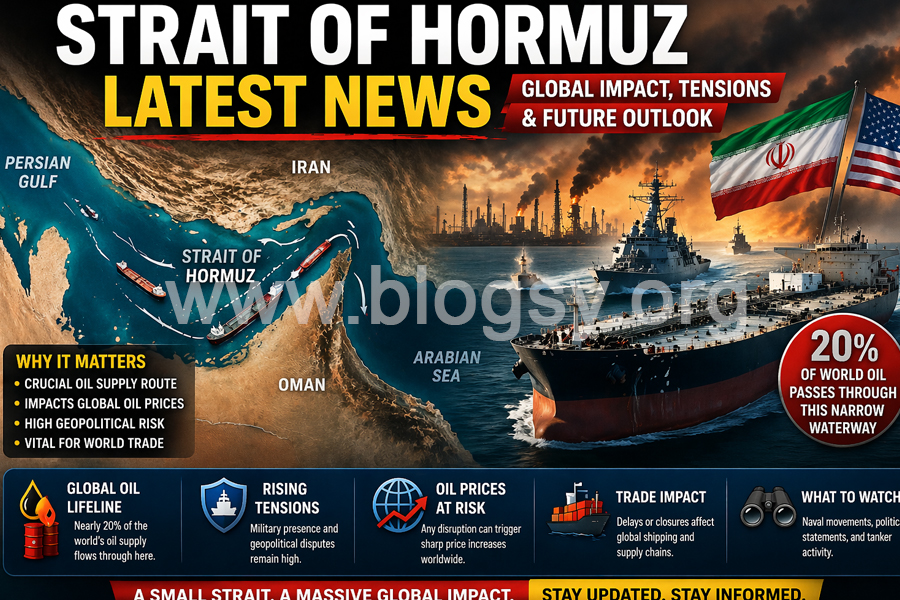
The Strait of Hormuz latest news has become one of the most searched topics worldwide—and for good reason. This narrow waterway is not just a map location; it’s the lifeline of global oil supply and a hotspot of rising geopolitical tension. Any disruption here can shake economies, increase fuel prices, and trigger global uncertainty.
In this article, you’ll learn everything—from what the Strait of Hormuz is, why it matters, how it works, and what recent developments mean for the world. Whether you’re a beginner or someone tracking global politics, this guide will break it down in a simple, practical way.
What Is Strait of Hormuz Latest News
The Strait of Hormuz latest news refers to recent updates, developments, and tensions happening around the Strait of Hormuz—a narrow passage connecting the Persian Gulf to the Arabian Sea.
It lies between Iran and Oman, making it one of the most strategically important shipping routes in the world.
The Strait of Hormuz latest news covers updates about geopolitical tensions, oil supply risks, and military activities in this critical waterway. Since nearly 20% of global oil passes through it, any disruption can impact fuel prices, global markets, and international relations, making it one of the world’s most closely monitored regions.
Why Strait of Hormuz Latest News Is Important
This region plays a massive role in the global economy.
Key Reasons:
- Around 20% of the world’s oil supply passes through here
- It directly affects global oil prices
- It influences Middle East stability
- It impacts international trade routes
Simple Example:
If tensions rise between Iran and Western countries, oil shipments may slow down → supply drops → prices increase → petrol becomes expensive worldwide.
How Strait of Hormuz Works
The Strait acts as a critical chokepoint for oil transportation.
Process Flow:
- Oil is extracted in Gulf countries
- Tankers move through the Strait
- Ships enter the Arabian Sea
- Oil is exported globally
Important Fact:
The Strait is only about 33 km wide at its narrowest point, making it vulnerable to disruptions.
Key Features or Benefits
Despite tensions, the Strait provides major advantages:
- Fastest route for oil export
- Supports global energy demand
- Enables international trade efficiency
- Strategic importance for economies
Feature Breakdown Table
| Feature | Description |
| Location | Between Iran & Oman |
| Width | ~33 km narrowest |
| Oil Traffic | ~20% of global supply |
| Strategic Value | Extremely high |
| Risk Level | High during tensions |
Step-by-Step Guide: How Strait of Hormuz Impacts Oil Prices
Step 1: Tension or Conflict
Military threats or political conflict arise.
Step 2: Shipping Risk Increases
Tankers face delays or rerouting.
Step 3: Oil Supply Drops
Less oil reaches global markets.
Step 4: Prices Increase
Demand stays high → prices rise.
Step 5: Global Impact
Fuel, transport, and goods become expensive.
Real Life Examples
1. 2019 Tanker Attacks
Several oil tankers were attacked near the Strait.
Result:
- Oil prices jumped
- Global markets reacted instantly
2. US-Iran Tensions
Statements and actions by leaders like Donald Trump increased tensions.
Impact:
- Military presence increased
- Shipping concerns rose
3. Recent Developments
Latest reports show:
- Increased naval activity
- Ongoing geopolitical monitoring
- Rising concerns about supply disruption
Pros and Cons
| Pros | Cons |
| Critical for global oil supply | High geopolitical tension |
| Shortest trade route | Vulnerable to conflict |
| Supports global economy | Risk of shipping disruption |
| Strategic importance | Military threats possible |
Common Mistakes to Avoid
Many people misunderstand the Strait. Avoid these:
- Thinking it’s just a small regional route
- Ignoring its global economic impact
- Underestimating geopolitical risks
- Assuming disruptions won’t affect daily life
Expert Tips or Best Practices
For Investors:
- Monitor oil prices trends
- Follow Middle East geopolitical news
For Businesses:
- Prepare for fuel price fluctuations
- Diversify supply chains
For General Readers:
- Stay updated with reliable news
- Understand global interconnections
Best Alternatives or Comparisons
When the Strait faces issues, alternatives are limited.
Comparison Table
| Route | Advantage | Limitation |
| Strait of Hormuz | Fastest route | High risk |
| Saudi pipelines | Safer | Limited capacity |
| UAE pipelines | Alternative path | Not enough volume |
| Shipping reroutes | Avoid conflict | Expensive & slow |
Frequently Asked Questions (FAQs)
1. Why is the Strait of Hormuz so important?
Because it carries nearly 20% of global oil supply, making it critical for energy markets.
2. What happens if the Strait is closed?
Oil supply drops, prices surge, and global economies face disruption.
3. Who controls the Strait of Hormuz?
It lies between Iran and Oman, but international laws allow shared usage.
4. Is the Strait safe for shipping?
Generally yes, but tensions can increase risks.
5. How does it affect petrol prices?
Disruptions lead to reduced supply → higher oil prices → expensive fuel.
6. Why is it always in the news?
Due to constant geopolitical tensions and its global importance.
Conclusion
The Strait of Hormuz latest news is not just another headline—it’s a critical indicator of global stability, economic health, and energy security. From oil prices to international relations, this narrow waterway plays a massive role in shaping the modern world.
Understanding how it works and why it matters helps you stay informed and prepared. Whether you’re an investor, student, or everyday reader, keeping an eye on developments here can give you valuable insights into global trends.
In today’s interconnected world, even a small disruption in the Strait of Hormuz can create ripple effects across the globe—making it one of the most important places to watch.
Don’t miss out on any news—keep in touch for real-time information: BlogSy!
Related Posts